
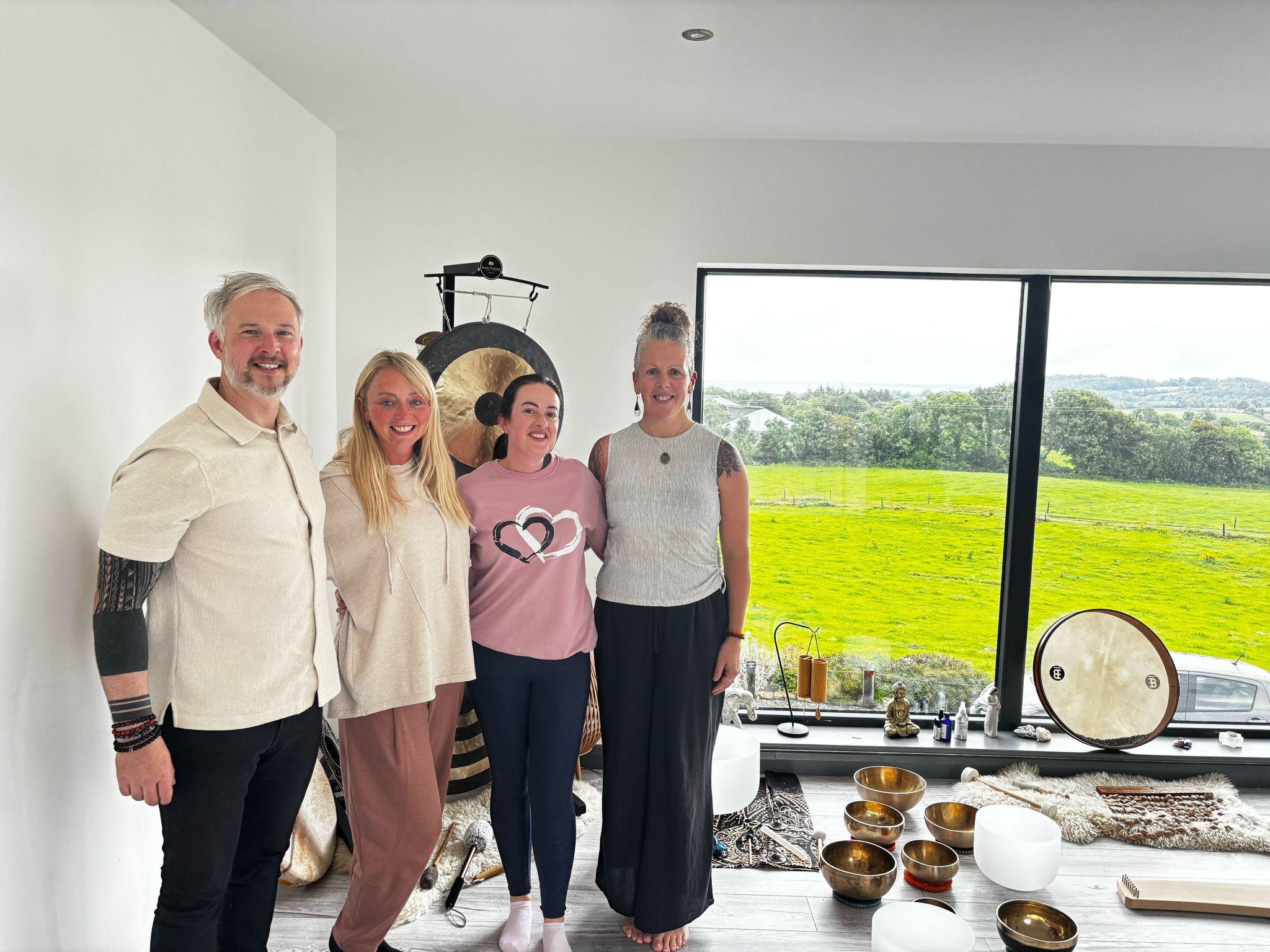
This summer I completed training in conscious connected breathwork, which now allows me to bring this powerful practice into the therapy space with my clients. My personal journey with breathwork began in 2022, when I was first introduced to it. The experience surprised me, not only in how calming and restorative it felt, but in how profound the results were. Over time I found my body more relaxed and tapped into deeper healing and transformation. So much so, that I chose to write my thesis on the different types of breathwork that can be integrated into therapy.
For me, conscious connected breathwork feels like a form of deeper meditation. It creates a space where the mind can quieten, the body can release, and important insights have the room to land. Many of my clients describe feeling lighter, calmer, and more at peace after a session. There’s often a sense that something has shifted—whether it’s emotional tension, old thought patterns, or physical stress stored in the body.
Another approach I use is inner child breathwork, which allows us to gently look back at the client’s past and begin to heal old wounds. This practice can help bring compassion and understanding to parts of ourselves that may have felt overlooked or silenced, allowing integration and wholeness to unfold in the present.
Breathwork itself is an experience that engages the senses, it often includes carefully chosen music, calming scents, the soft glow of candles, and setting clear intentions for the session. All of this creates a safe and soothing environment where clients can relax into the process. Each persons journey is different, however some of the words that clients shared “relaxing” “calming” “special” “spiritual”.
Alongside my breathwork training, I also studied Advanced CBT (Cognitive Behavioural Therapy), which deepened my understanding of how the body and mind are closely linked. From both science and practice, I see how breathwork is a somatic experience, a body-based way of working with emotions that helps regulate the nervous system and restore balance. The body often stores unprocessed energy and unresolved experiences, which can contribute to both physical discomfort and emotional distress. As Peter Levine explains in Waking the Tiger, the body often holds onto trauma when overwhelming experiences are not fully processed, and breathwork offers a gentle way to release that stored energy and restore balance. Breathwork offers a pathway to release this stored energy in a safe and supportive way.
For me, bringing together psychotherapy and breathwork is about offering clients a fuller, more integrative healing experience one that honours both the mind and the body. The breath is the window to letting go.